
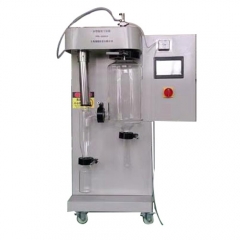
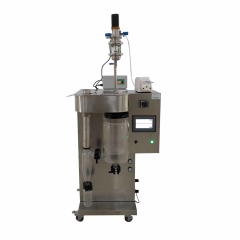
High quality 1.5L scale lab spray dryer equipment
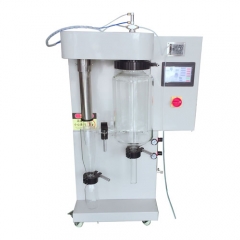
Lab scale spray dryer is suitable for the production of in universities, research institutes and food and pharmaceutical chemical enterprises.
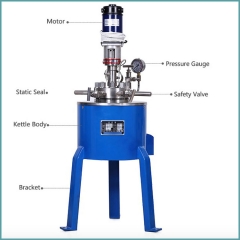
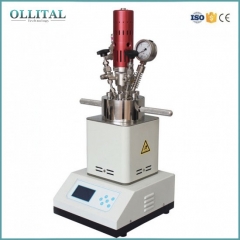
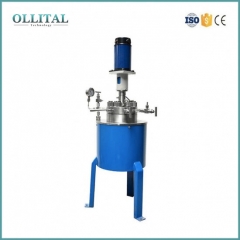
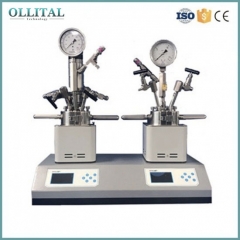
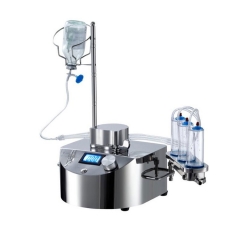
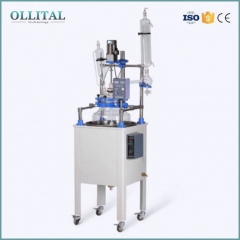
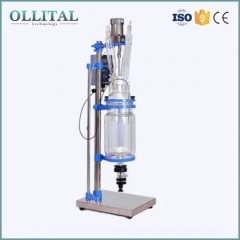
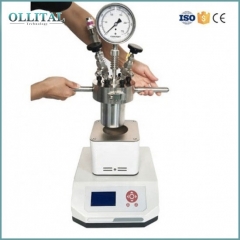
Amid the rapid evolution of biomanufacturing, the fermentation industry has long since moved beyond traditional, workshop-style natural fermentation, entering a new industrial era defined by precision, intelligence, and scalability. The bioreactor serves as the core equipment underpinning this industrial transformation. Acting as both the central vessel for fermentation processes and an "intelligent factory" for microbial metabolism, the bioreactor overcomes the limitations of traditional methods—such as low efficiency, poor stability, and weak controllability. It facilitates the entire workflow—from strain cultivation and metabolic regulation to product synthesis and mass production—and finds extensive application in key sectors including food fermentation, biopharmaceuticals, enzyme production, and new energy biomanufacturing.
Fermentation bioreactor is a device that provides a suitable environment for the growth and metabolism of microorganisms, cells, or other biological systems.During fermentation, microorganisms consume nutrients from the culture medium and produce target products—such as amino acids, organic acids, enzymes, antibiotics, alcohol, fermented food products, microbial agents, and bioactive substances—through metabolic processes.By regulating the cultivation environment, the bioreactor enables microorganisms to maintain a stable growth state, thereby enhancing the yield and quality of the target products.
A typical fermentation process can be outlined as follows:
Medium preparation → Sterilization → Inoculation → Fermentation cultivation → Parameter control → Feeding → End of fermentation → Discharge → Downstream processing
Throughout this process, the bioreactor performs the core functions of cultivation and process control.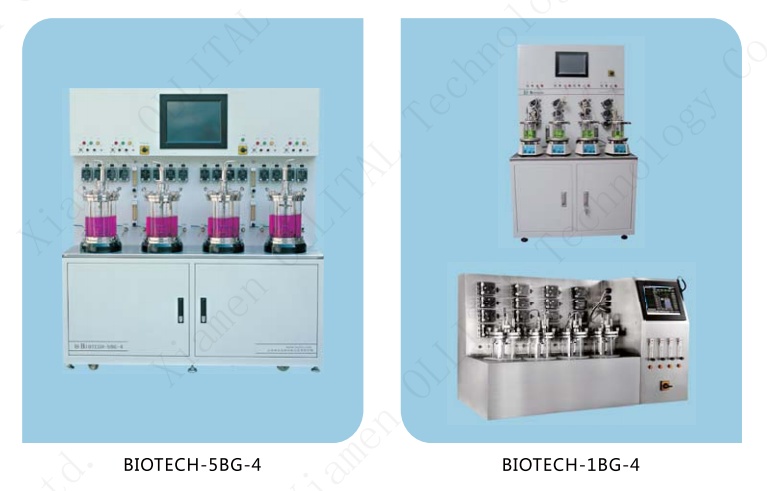
The fermentation industry encompasses a wide variety of products, with metabolic characteristics varying significantly depending on the product and microbial strain; consequently, bioreactor equipment has evolved to meet specific needs. Current mainstream applications in the industry fall into the following categories, covering the entire spectrum from laboratory R&D to industrial-scale production.
This is the most widely used and technologically mature type of bioreactor in the fermentation industry, serving as the primary equipment for traditional sectors such as food fermentation, antibiotic production, and enzyme preparation. The equipment utilizes a mechanical agitation system to ensure thorough mixing of the culture medium, microbial strains, and oxygen, thereby resolving issues like uneven dissolved oxygen distribution and material stratification. Equipped with modules for temperature control, pH regulation, and automatic feeding, it meets the fermentation requirements of the vast majority of microorganisms, including bacteria, yeast, and molds.
Large-scale production of amino acids, organic acids, alcohol, and probiotic preparations, as well as antibiotics like penicillin and cephalosporins, relies on large stirred-tank bioreactors. Offering high adaptability, operational stability, and substantial production capacity, these reactors serve as the fundamental core equipment of the fermentation industry.
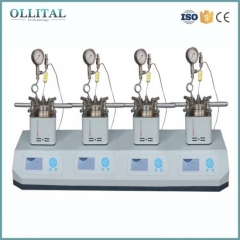
Unlike traditional single fermentation tanks, parallel bioreactors feature a multi-vessel parallel design that allows for the simultaneous execution of multiple control experiments under identical conditions. They are core equipment for modern fermentation process R&D and parameter optimization. These systems efficiently handle tasks such as strain screening, optimization of medium composition, and fine-tuning of process parameters, overcoming the limitations of traditional experiments—namely, the inability to run multiple groups simultaneously, long cycles, and low efficiency.
Their key advantages lie in precise, comparable data and rapid process scale-up capabilities; the data correlation between small-scale experimental tanks and 75L industrial production tanks can exceed 98%. This effectively bridges the technical gap between laboratory R&D and industrial production, significantly shortening the time required to implement fermentation processes. They are critical tools for enterprises looking to iterate products and optimize production capacity.
Designed for shear-sensitive fermentation strains—such as mycelia and animal cells—airlift bioreactors eliminate mechanical agitation mechanisms in favor of material mixing driven by the circulation of rising and falling airflow. This approach avoids mechanical shear damage, thereby maximizing the preservation of strain viability. Furthermore, the equipment features a simple structure, excellent sterility, and lower energy consumption, making it particularly well-suited for the fermentation of fungi (such as *Aspergillus niger* and *Ganoderma* mycelia) as well as the production of polysaccharides and natural bioactive compounds.
000000;">Amid the rapid advancement of synthetic biology and the explosive growth of the biomanufacturing industry, the intelligent, precise, and green upgrading of bioreactors will continue to break through technical bottlenecks in the fermentation sector. This evolution drives high-quality development in biomanufacturing across fields such as food, pharmaceuticals, chemicals, and new materials, serving as a foundational pillar for the future bio-economy.
From traditional, extensive fermentation methods to modern, precision biomanufacturing, every upgrade in the fermentation industry has relied on the technological evolution of bioreactors. These reactors are not merely the core equipment facilitating microbial metabolism; they are also the central platform for process optimization, capacity expansion, quality enhancement, and the transition toward greener operations.



 un service en ligne
 +86 15960821529
 kevin@ollital.comkevinollital@gmail.com
 +86 15960821529
 +8615960821529


