
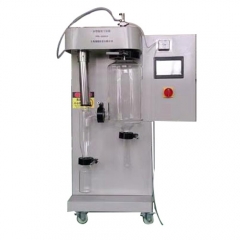
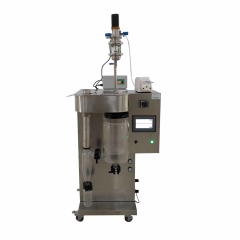
High quality 1.5L scale lab spray dryer equipment
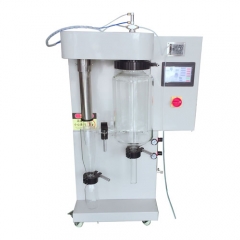
Lab scale spray dryer is suitable for the production of in universities, research institutes and food and pharmaceutical chemical enterprises.
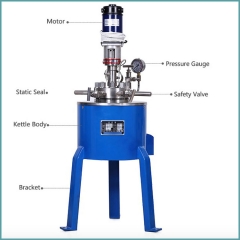
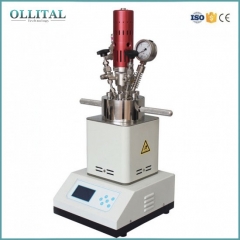
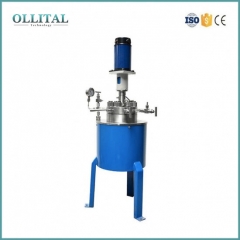
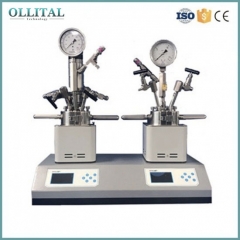
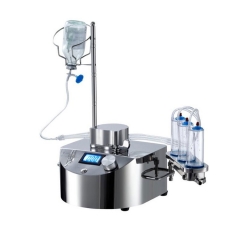
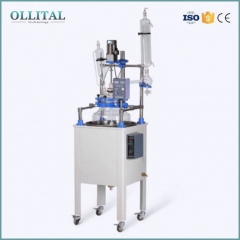
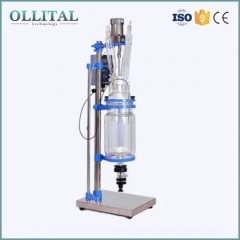
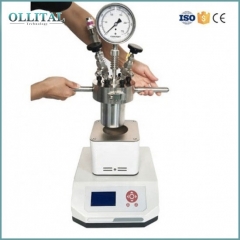
Bioreactor: Core Equipment Bridging LabScale R&D to Commercial Manufacturing
Scaling cellculture workflows from laboratory bench to commercial manufacturing without compromising product quality remains a persistent pain point across biopharma process development.
The hardware enabling this transition is the bioreactor. For cell culture applications, a cell culture bioreactor provides a well-regulated environment for cells to grow and produce target products. They deliver a wellregulated, scalable cultivation environment for cells or microorganisms, enabling growth, metabolic activity and targetproduct biosynthesis under tightly controlled operating conditions.
In practical terms, it stabilizes key culture conditions including temperature, dissolved oxygen, pH and agitation to sustain cell proliferation and product formation. Its core engineering value lies in converting inherently variable biological behaviour into quantifiable, repeatable unit operations — this is the critical step that translates labscale biological findings into viable production workflows.
Bioreactors differ from conventional chemical reactors in several fundamental ways:
Chemical reactors employ metal or chemical catalysts that remain largely unchanged throughout reaction cycles. Bioreactors, by contrast, utilize enzymes or viable living cells, which grow, proliferate and metabolize during cultivation. Cells serve both as the biocatalyst and one of the process’s primary outputs. Accordingly, bioreactors must maintain cultivation conditions to preserve cell viability, a requirement absent for chemical reactors.
Bioreactions are typically carried out under ambient temperature and pressure, yet demand tighter control over parameters including temperature, pH, dissolved oxygen (DO), agitationinduced shear stress, and nutrient concentration. Parameter fluctuations directly impact cellular metabolism and target product expression, rather than merely altering reaction rates.
Most bioprocesses rely on axenic pureculture workflows. The reactor must maintain sterility throughout the entire run; all productcontact wetted components including gas supply, feed lines, agitation and sampling assemblies need to be sterilizable and retain sterility in operation. This sets higher requirements for equipment design and operational protocols compared with chemical reactors.
Biological cells are less resistant to mechanical force compared with chemical molecules. Highintensity agitation or aeration generates shear forces capable of damaging cell membranes, especially for animal and plant cell cultures. Bioreactor design must balance masstransfer performance against shear exposure to cells; impeller tip speeds are typically kept below 1 m/s. Such cellrelated shear considerations do not exist for chemical reactor design.
These four differences mean that bioreactors and chemical reactors diverge in material selection, agitation design, sterilization methods, and control logic at every level.
Bioreactors can be classified from multiple perspectives. The following four dimensions are the most commonly used:
Based on the construction material, bioreactors are mainly divided into glass, stainless steel, and single-use types.
Glass bioreactors feature excellent visual observation capability for culture status monitoring and are widely used as laboratory bioreactors for small-volume cell culture. Stainlesssteel bioreactors deliver superior mechanical strength and pressure resistance for pilotscale and commercial production, with industrialgrade systems ranging from 10 L up to 20,000 L. Singleuse bioreactors adopt presterilized disposable bags, removing requirements for CIP/SIP cleaning and sterilization validation. They are now widely adopted for process development and GMPcompliant manufacturing.
Biocatalysts fall into two main categories: enzymes and cells.
In enzyme-catalyzed reactions, the enzyme itself does not change or proliferate during the process, similar to chemical catalysts. Cell culture, in contrast, is a typical autocatalytic process—the cells are both the catalyst and one of the primary products, continuously growing and proliferating throughout the reaction. This fundamental distinction creates major differences in design logic between enzyme and cell reactors. Enzyme reactors share more structural similarities with conventional chemical reactors, whereas cell reactors must sustain cell growth and metabolic activity while satisfying stringent axenic culture and sterility specifications.
Cell reactors can be further divided into microbial cell reactors (commonly referred to as fermenters), animal cell reactors, and plant cell reactors.
Different cell types have different physiological characteristics and therefore different reactor requirements. Mammalian cells (such as CHO cells and HEK293 cells) are highly shear-sensitive, requiring reactor designs that balance mass transfer efficiency with low shear stress. Plant cell cultures often require illumination, necessitating photobioreactors. Microbial cells feature comparatively high shear tolerance, allowing for broader operating envelopes in agitation and aeration design.
Based on the metabolic needs of cells or microorganisms, bioreactors can be divided into three types:
Aerobic bioreactors require continuous oxygen supply for the production of antibiotics, enzymes, and organic acids. They need well-designed aeration and dissolved oxygen control systems. Anaerobic bioreactors operate without air supply, used for ethanol, beer, and acetone-butanol fermentation, with system design focused on maintaining an oxygen-free environment. Photobioreactors use transparent materials for the cultivation of algae, photosynthetic bacteria, and plant cells, requiring controllable illumination conditions.
Different bioreactor configurations vary in structural features, mixing methods, and application scenarios:
This is the most common aerobic fermentation equipment, using turbine impellers to disperse bubbles and enhance gas-liquid mass transfer while maintaining uniform mixing of the culture medium. It is suitable for microbial fermentation and some cell culture applications, with scales ranging from laboratory to industrial production.
Relies on the rising force of sparged air to drive liquid circulation and mixing. With no mechanical agitation components, it offers simple construction and low shear stress, making it suitable for shear-sensitive cell cultures.
Uses compressed air for both agitation and aeration. Its simple structure makes it suitable for large-scale microbial fermentation.
Commonly used for immobilized enzyme or immobilized cell reactions, where the catalyst is fixed in the bed and the substrate flows through continuously. Fixed-bed systems can achieve high cell density but require higher capital investment.
Uses presterilized disposable bags, removing requirements for CIP/SIP cleaning and sterilization validation. In recent years, they have become widely used in process development and GMP manufacturing. Based on mixing methods, they can be divided into wave-mixed, stirred, and orbital-shaking types, among which stirred single-use bioreactors are currently the most widely applied configuration.
A fully functional bioreactor must achieve precise control across the following parameters:
Different cell types have different optimal growth temperatures. Mammalian cells are typically maintained at 37°C, while microbial cultures have broader temperature ranges (e.g., yeast at 28°C, E. coli at 37°C). Most productiongrade units feature jacketed temperaturecontrol systems or heating blankets, delivering typical control accuracy of ±0.1 °C.
Maintains pH within the set range by adding acid or base to the culture medium. For example, CHO cells are typically controlled at pH 7.2. pH is usually regulated through a combination of CO₂ gas and base addition. pH fluctuations directly affect cellular metabolism and product quality, including glycosylation patterns in mammalian cell cultures.
Aerobic culture requires continuous oxygen supply. DO is controlled through the interplay of agitation speed, aeration rate, and gas composition (air, O₂, N₂, CO₂). A DO cascade control strategy can be set on the operating interface—when DO falls below the setpoint, the system automatically increases agitation speed, O₂ flow, or aeration rate in sequence.
The agitation system ensures uniform mixing, cell suspension, and gas-liquid mass transfer. Mammalian cells are highly shear-sensitive—impeller tip speed should typically be kept below 1 m/s. Agitation rate must balance mixing efficiency against cell damage.
Aerobic culture requires continuous oxygen supply; systems typically incorporate mass flow controllers (MFCs) to provide independent, precise control of air, O₂, CO₂, and N₂. Aeration modes include sparging (through a sparger into the culture medium) and surface aeration (through the headspace above the liquid).
In fed-batch and perfusion cultures, feeding strategy directly affects cell density and product expression. Common feeding methods include constant-rate feeding and dynamic feeding based on viable cell density (VCD), which adjusts feed rate according to real-time cell density to maintain stable nutrient concentrations.
Media containing serum or proteins tend to generate significant foam during aeration and agitation. Mechanical foam breakers or chemical antifoam agents are used. Some systems are equipped with foam sensors and antifoam pumps for automatic foam control.
In perfusion culture, culture volume must be kept constant. Systems may incorporate level sensors to hold a constant working volume by controlling the start/stop or flow rate of the outlet pump.
Depending on process requirements, bioreactors can also be equipped with online monitoring modules for CO₂ partial pressure, conductivity, turbidity/cell density, viable cell density, redox potential, and off-gas analysis (O₂/CO₂ content).
Bioreactors for cell culture must maintain stable and reproducible operating conditions across different scales, from laboratory research to commercial manufacturing. Bioreactor process scaleup is essential for translating biopharmaceutical R&D toward commercial manufacturing. Agitation and aeration require careful scalingrule definition; constant impeller tip speed or volumetric oxygen masstransfer coefficient (kLa) are commonly adopted for process translation across scales. Operating parameters fall into volumedependent groups (e.g., working volume, feed volume, agitation, aeration rate) and volumeindependent groups (e.g., pH, dissolved oxygen, temperature). The objective of scaleup is to preserve consistent process performance across different scales.
Bioreactors serve as core hardware for commercial biomanufacturing and bioprocess development. As they process living organisms, two core goals need to be achieved: maintaining cell viability and driving biosynthesis of target products. Recognizing the distinctions between bioreactors and conventional chemical reactors, as well as the impacts of cell type, operation mode and control strategy on equipment configuration, supports rational equipment selection and robust process scaleup.



 un service en ligne
 +86 15960821529
 kevin@ollital.comkevinollital@gmail.com
 +86 15960821529
 +8615960821529


