OLT(241860295) 10:58:43 AW-759006566 OLT(241860295) 10:58:49

nouvelles

Accueil /nouvelles /

How Does a High Pressure Reactor Work in Chemical Synthesis?

produits chauds

DERNIÈRES NOUVELLES

How Does a High Pressure Reactor Work in Chemical Synthesis?

28 Sep, 2026
  • Chemical reactions are often carried out under conditions that cannot be achieved with an ordinary laboratory vessel. When a reaction requires elevated pressure, high temperature, controlled gas introduction, or intensive mixing, a high pressure reactor provides a sealed environment in which these conditions can be established and monitored.
  • Unlike a conventional open or atmospheric-pressure reaction vessel, a high pressure reactor is designed to maintain a controlled reaction environment while allowing researchers to regulate key variables such as temperature, pressure, stirring, and reaction time. This makes high pressure reactors useful for chemical synthesis, catalytic reactions, hydrogenation, polymerization, oxidation, hydrothermal synthesis, and other laboratory studies where pressure is part of the reaction conditions.
  • But how does a high pressure reactor actually work? The answer is not simply “the vessel holds pressure.” The reactor combines a pressure-resistant vessel with heating, mixing, measurement, sealing, and safety systems so that the reaction can proceed under defined conditions.
  • What Happens Inside a High Pressure Reactor?
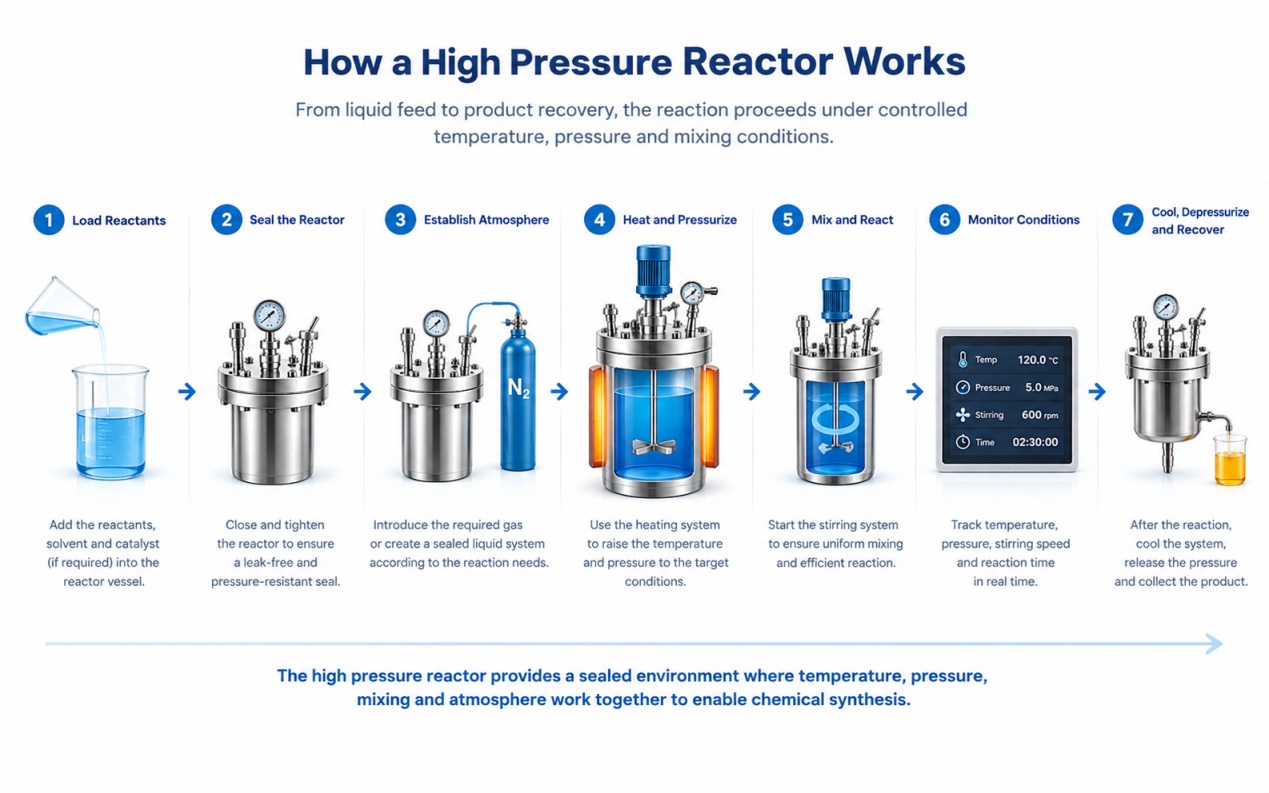
  • The basic operating process can be understood as a controlled sequence: Reactants are loaded → the reactor is sealed → the required atmosphere is established → temperature and pressure are increased → the contents are mixed and reacted → reaction conditions are monitored → the system is cooled and depressurized before product recovery.
  • The exact sequence depends on the reaction. For example, a hydrogenation experiment may require hydrogen to be introduced into the sealed reactor before or during the reaction. A hydrothermal synthesis experiment may instead rely on a sealed liquid system in which heating generates the required pressure.
  • Therefore, the reactor does not create a useful reaction condition by pressure alone. Its value comes from maintaining the combination of conditions required by a particular chemical process, a key feature of a high pressure chemical reactor.
  • The Reactor Vessel Creates a Controlled Reaction Space
  • At the center of a high pressure reactor is the pressure-resistant reaction vessel.
  • The vessel contains the reactants while they are exposed to elevated temperature and pressure. Its construction must therefore be matched to the intended operating conditions and reaction medium.
  • For laboratory chemical synthesis, a laboratory high pressure reactor can range from very small reaction vessels for screening experiments to larger laboratory or pilotscale systems.
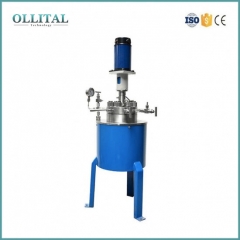
  • Ollital's high pressure reactor range includes micro-scale models from 10 mL to 500 mL, while larger stirred reactors are also available.
  • The required volume is not determined only by how much product is needed. Researchers also need to consider:
  • quantity of reactants
  • gas-to-liquid ratio
  • required headspace
  • mixing requirements
  • expected expansion during heating
  • sampling requirements
  • future scale-up needs
  • For gas-phase or gas–liquid reactions, headspace can be particularly relevant because the available gas volume affects how much gas can be introduced and how the pressure changes during the experiment.
  • Sealing Keeps the Reaction Environment Isolated
  • Once the reactants have been loaded, the reactor must be properly sealed. Sealing is particularly important because a high pressure reactor needs to maintain the intended internal environment without uncontrolled leakage.
  • This becomes even more important when working with:
  • hydrogen
  • oxygen
  • volatile solvents
  • toxic chemicals
  • corrosive media
  • Different reactor designs use different sealing arrangements. For example, Ollital's small lab high pressure reactors use magnetic stirring and a sealed structure; the stirring force is transferred through magnetic coupling rather than a conventional rotating shaft passing directly through the reactor wall. This design helps address leakage around the stirring shaft.
  • The sealing method therefore becomes part of reactor selection rather than a minor mechanical detail.
  • Heating Raises the Reaction to the Required Temperature
  • Many high pressure reactions depend on temperature as much as pressure. The heating system raises the reactants to the required reaction temperature and maintains that temperature for the specified reaction period.
  • Depending on the reactor design, heating may be provided by methods such as:
  • electric heating
  • heating blocks
  • heating jackets
  • thermal oil systems
  • Temperature control is important because reaction rate, equilibrium, solvent behavior, gas solubility, and pressure can all change as temperature changes. This is why a high temperature high pressure reactor specification should not be evaluated based only on its maximum temperature. The more useful question is:
  • Can the reactor maintain the temperature required by the actual reaction with appropriate control and monitoring?
  • Pressure Is Controlled According to the Reaction
  • Pressure is one of the defining features of a high pressure chemical reactor, but the required pressure depends strongly on the reaction.
  • Pressure can be generated in different ways. For a sealed liquid system, heating can cause the internal pressure to increase because of vapor pressure and thermal expansion. For gas-involved reactions, pressure may also be established by introducing a gas into the reactor.
  • This distinction is important. For example, hydrogenation requires hydrogen to participate in the reaction. A reactor may therefore need a gas inlet and appropriate pressure monitoring. By contrast, some hydrothermal reactions operate in a sealed system where the pressure develops as the temperature rises.
  • Ollital's reactor systems include pressure monitoring and gas connection options for applications involving controlled gas environments.
  • Therefore, when selecting a reactor, users should define not only the target pressure but also how that pressure is generated and maintained.
  • Stirring Improves Mixing and Heat and Mass Transfer
  • Pressure and temperature alone do not guarantee a uniform reaction. For many chemical synthesis processes, stirring is required to distribute reactants and improve heat and mass transfer.
  • This becomes particularly important for:
  • gas–liquid reactions
  • liquid–liquid reactions
  • liquid–solid reactions
  • gas–liquid–solid catalytic reactions
  • viscous reaction systems
  • For laboratory systems, stirring speed and the selected stirring configuration should therefore be considered together with the physical properties of the reaction mixture.
  • A low-viscosity liquid and a viscous slurry do not necessarily require the same mixing approach.
  • Sensors Allow Researchers to Monitor the Reaction
  • A laboratory high pressure reactor normally needs to provide information about the conditions inside the vessel.
  • Depending on the reactor design, this may include:
  • temperature
  • pressure
  • stirring speed
  • reaction time
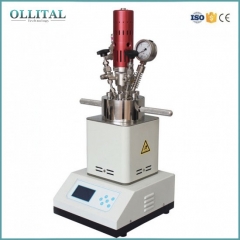
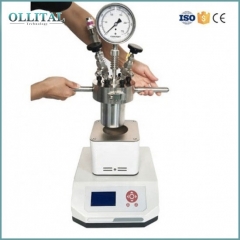
  • For example, Ollital's micro high pressure chemical reactor provides real-time monitoring of reaction pressure and temperature, together with adjustable stirring.
  • More advanced systems can provide additional control functions.
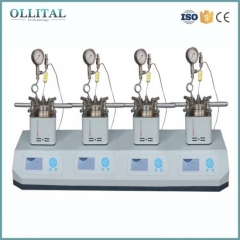
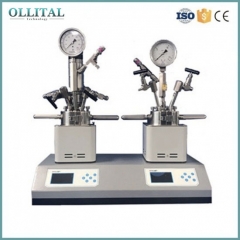
  • Ollital's full automatic parallel micro high pressure reactor, for example, is designed for experiments where temperature, pressure, and other reaction conditions need to be monitored across multiple reaction vessels. Each reactor can operate independently, with over-pressure alarm and safety decompression functions. This type of monitoring is particularly useful when researchers need to compare reaction conditions rather than simply carry out one reaction.
  • Safety Systems Manage Abnormal Conditions
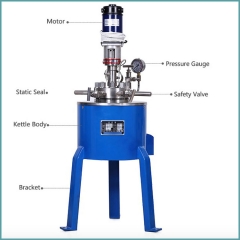
  • A high pressure reactor must be designed around the possibility that actual reaction conditions may differ from the expected conditions. For this reason, pressure relief and temperature protection are important parts of the system.
  • Depending on the reactor configuration, safety features may include:
  • pressure gauges or pressure sensors
  • pressure relief devices
  • over-temperature protection
  • automatic pressure relief
  • afety interlocks
  • controlled gas valves
  • Ollital's product range includes reactor configurations with safety protection and pressure relief functions. Its parallel reactor systems also include over-pressure alarms and safety decompression functions.
  • The appropriate safety configuration should be determined by the actual reaction chemistry and operating conditions rather than selected only from a standard equipment checklist.
  • How a High Pressure Reactor Is Used in Chemical Synthesis
  • The working principle becomes easier to understand through common reaction types.
  • Hydrogenation
  • Hydrogenation is a typical gas–liquid or gas–liquid–solid reaction. A typical hydrogenation reactor system may contain: Hydrogen + liquid reactants/solvent + catalyst. The reactor provides a sealed environment in which hydrogen can be introduced and the reaction mixture can be heated and stirred. The catalyst may be suspended in the liquid phase, making effective mixing particularly important.
  • For this application, researchers need to consider pressure, temperature, gas introduction, catalyst handling, stirring, and sealing together rather than treating pressure as the only important parameter.
  • Hydrothermal Synthesis
  • Hydrothermal synthesis uses a sealed environment at elevated temperature and pressure to promote chemical reactions and material formation. The reaction can involve aqueous solutions, suspended materials, or poorly soluble precursors.
  • Ollital's reactor range includes hydrothermal synthesis reactors and pressure vessels designed for high-temperature and high-pressure material research.
  • Compared with hydrogenation, the pressure in a hydrothermal system can arise largely from heating a sealed liquid system. This illustrates why two reactors with the same nominal pressure rating may still have very different application requirements.
  • Polymerization
  • Polymerization reactions can require controlled temperature, pressure, stirring, and reaction time. As the reaction progresses, viscosity may change significantly. This can affect mixing and heat transfer.
  • For such applications, reactor selection should therefore consider not only vessel volume and pressure rating but also stirring capability and heat-transfer performance.
  • Ollital's high pressure reactor range includes systems intended for polymerization and other organic synthesis processes.
  • What Determines the Right High Pressure Reactor?
  • Reaction temperature
  • Define the required operating temperature rather than simply choosing the highest available temperature.
  • Operating pressure
  • Determine the normal operating pressure, expected pressure changes, and required safety margin according to the process and applicable design requirements.
  • Reaction medium
  • Consider whether the reaction contains water, organic solvents, corrosive chemicals, gases, catalysts, or suspended solids.
  • Reaction phase
  • Determine whether the reaction is:
  • gas–liquid
  • liquid–liquid
  • liquid–solid
  • gas–liquid–solid
  • The reaction phase affects mixing, gas introduction, sampling, and reactor configuration.
  • Mixing requirements
  • Viscosity, catalyst loading, suspended particles, and reaction phase all influence the appropriate stirring arrangement.
  • Required reactor volume
  • Small-volume reactors can be useful for screening and early-stage research, while larger vessels may be required for process development or scale-up studies.
  • Why Reactor Pressure Rating Alone Is Not Enough
  • It is easy to compare high pressure reactors by looking at their maximum pressure rating. However, this can lead to an incomplete selection.
  • Imagine two experiments:
  • Experiment A: hydrothermal synthesis at elevated temperature in a sealed aqueous system.
  • Experiment B: catalytic hydrogenation using pressurized hydrogen.
  • Both may require a high pressure reactor, but their gas handling, sealing, mixing, pressure control, and safety requirements can be substantially different.
  • The same principle applies to corrosive reactions.
  • A reactor operating at relatively moderate pressure may still require special materials if the reaction medium is highly corrosive.
  • Therefore, the basic selection question should not be: “How many MPa can the reactor withstand?”
  • It should be: “Can the complete reactor system safely and consistently provide the temperature, pressure, atmosphere, mixing, and material compatibility required by my reaction?”
  • From Reaction Conditions to Reactor Configuration
  • A practical way to select a laboratory high pressure reactor is to work through the reaction requirements step by step:
  • Reaction chemistry
    ↓
    Temperature + pressure
    ↓
    Reaction phase and medium
    ↓
    Mixing and gas requirements
    ↓
    Material and sealing requirements
    ↓
    Monitoring and safety functions
    ↓
    Reactor volume and configuration
  • This approach helps prevent a common purchasing mistake: selecting a reactor based on vessel volume or pressure alone while overlooking the actual chemistry.
  • For research laboratories, flexibility can also be valuable. A reactor that supports controlled heating, stirring, pressure monitoring, and gas handling can accommodate a wider range of experimental conditions than a basic sealed vessel.
  • Final Considerations Before Purchasing
  • A high pressure reactor is essentially a controlled reaction environment. The vessel provides the pressure boundary. The heating system establishes temperature. The stirring system promotes mixing and heat and mass transfer. Sensors monitor the reaction conditions. Gas connections establish the required atmosphere when needed, while safety devices help manage abnormal pressure or temperature conditions.
  • The best configuration depends on the chemistry being studied.
  • Before purchasing, researchers should prepare at least these five pieces of information:
  • Required reaction temperature
  • Normal and maximum operating pressure
  • Reaction medium and corrosiveness
  • Reaction phase and mixing requirements
  • Required reactor volume and future experimental plans
  • With these parameters defined, it becomes much easier to determine whether a micro reactor, stirred high pressure reactor, hydrothermal reactor, or parallel reactor system is appropriate.
  • Ollital offers laboratory high pressure reactor configurations for chemical synthesis, hydrogenation, hydrothermal synthesis, polymerization, and other high-temperature/high-pressure research applications. The available configurations range from small-volume micro reactors to larger stirred systems, with options for different pressure, temperature, stirring, material, and control requirements.
  • FAQ:
  • Q1: How does a high pressure reactor work?
  • A1: A high pressure reactor creates a sealed and controlled environment in which researchers can regulate temperature, pressure, mixing, gas atmosphere, and reaction time. The reaction takes place inside the pressure-resistant vessel while sensors and control systems monitor the operating conditions.
  • Q2: What is a high pressure reactor used for?
  • A2: High pressure reactors can be used for chemical synthesis, hydrogenation, hydrothermal synthesis, polymerization, oxidation, catalytic reactions, and other processes requiring controlled high-pressure or high-temperature conditions.
  • Q3: Does a high pressure reactor always require gas?
  • A3: No. Some reactions require pressurized gases such as hydrogen, while other sealed reactions develop pressure through heating. The required configuration depends on the reaction chemistry.
  • Q4: Why is stirring important in a high pressure reactor?
  • A4: Stirring helps distribute reactants and improve heat and mass transfer. It is particularly important for multiphase reactions such as gas–liquid and gas–liquid–solid systems.
  • Q5: How should I choose a high pressure reactor?
  • A5: Start with the reaction temperature, pressure, medium, reaction phase, mixing requirements, and reactor volume. Then determine the appropriate material, sealing method, heating, gas handling, monitoring, and safety configuration.
  • CTA:
  • If you are selecting a high pressure reactor for chemical synthesis, provide your required temperature, pressure, reaction medium, volume, and stirring requirements. Ollital can help match the reactor configuration to your experimental conditions.