
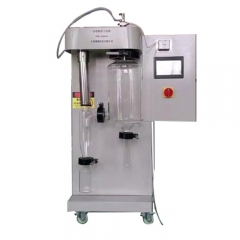
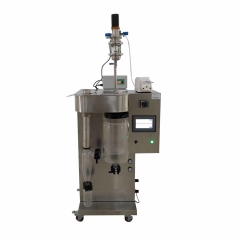
High quality 1.5L scale lab spray dryer equipment

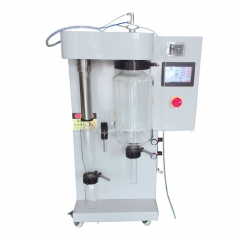
Lab scale spray dryer is suitable for the production of in universities, research institutes and food and pharmaceutical chemical enterprises.
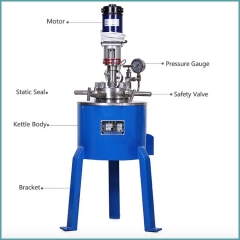
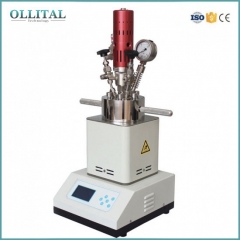
A high pressure homogenizer does not reduce particle size simply by applying pressure to a liquid. The actual homogenization process takes place when the pressurized material passes through a specially designed homogenizing valve, where pressure energy is converted into high-speed fluid motion and mechanical stresses.
The homogenizing valve is therefore one of the most important components affecting the performance of a high pressure homogenizer.
Two homogenizers operating at the same pressure do not necessarily produce identical particle size distributions. Differences in valve geometry, flow passage, pressure conditions, and material properties can change how the liquid behaves during processing.
This is particularly important when preparing oil-in-water emulsions, pharmaceutical formulations, cosmetic products, and other liquid dispersions. Although reducing droplet size can help improve physical stability, the final result also depends on the formulation and the ability of emulsifiers or stabilizing agents to protect the newly formed droplets.
Understanding how homogenizing valve design affects the process helps explain why equipment selection should consider more than maximum working pressure.
Before comparing different valve designs, it is useful to understand what happens inside a conventional high-pressure homogenizing system.
A typical system consists of a high-pressure pump and a homogenizing assembly. The pump pressurizes the liquid and forces it through a narrow passage formed by the valve and valve seat.
As the material passes through this restricted area, its velocity increases significantly. After leaving the narrow passage, the liquid enters a larger downstream region, where its velocity and pressure change rapidly.
Several physical mechanisms can contribute to particle or droplet disruption.
When liquid flows through a narrow passage, droplets and suspended particles experience deformation caused by the surrounding flow.
Shear stresses and extensional forces can stretch droplets and eventually cause them to break into smaller ones when the applied stresses exceed their resistance to deformation.
The high-speed flow leaving the valve restriction can develop turbulent structures.
These turbulent eddies generate fluctuating mechanical stresses that deform and disrupt dispersed droplets. Their contribution depends on the flow conditions, material properties, and valve geometry.
Cavitation occurs when local liquid pressure falls sufficiently below the liquid's vapor pressure, allowing vapor cavities to form.
When these cavities move into regions of higher pressure, they may collapse and generate localized pressure disturbances.
However, cavitation should not automatically be considered the dominant mechanism in every homogenization process. Its contribution depends on the equipment design, pressure conditions, and properties of the processed liquid.
The relative importance of these mechanisms varies with the application. For example, the Tetra Pak Dairy Processing Handbook describes turbulent eddies as the primary mechanism responsible for breaking down fat globules during conventional milk homogenization.
This illustrates why the homogenization process should be understood in relation to the specific material rather than through a single universal explanation.
The geometry of a homogenizing valve determines the flow path through which the liquid accelerates, expands, and changes direction.
Even relatively small differences in valve geometry can change the velocity distribution, turbulence intensity, and pressure field inside the homogenizing assembly.
Several structural factors deserve attention.
In a conventional homogenizing valve, the valve and valve seat form a restricted flow passage.
Their shapes determine how the liquid enters the gap, accelerates through it, and exits into the downstream region.
A carefully designed flow path can help establish a suitable distribution of mechanical stresses while controlling excessive energy dissipation and wear.
By contrast, an unsuitable geometry may create an unfavorable flow distribution or localized areas of excessive mechanical stress.
A 2022 study published in Chemical Engineering Research and Design compared two high-pressure homogenizer valve design principles using computational fluid dynamics (CFD).
The research examined outward radial flow and inward radial flow configurations. It found that their relative hydrodynamic performance depended on operating pressure, demonstrating that valve geometry and operating conditions cannot be evaluated independently.
Importantly, this study does not establish that one design is universally superior for every commercial homogenizer or formulation.
The gap between the valve and its corresponding seat is another important design parameter.
This narrow passage determines how the liquid accelerates and influences the flow conditions within the homogenizing assembly.
However, making the gap as narrow as possible does not automatically produce better homogenization.
The appropriate gap depends on several factors:
·Working pressure.
·Processing flow rate.
·Liquid viscosity.
·Valve geometry.
·Characteristics of the feed material.
An unsuitable gap may affect flow stability, processing capacity, and the distribution of mechanical stresses.
For materials containing relatively large particles or aggregates, the feed particle size must also be considered to reduce the risk of blockage.
Therefore, gap dimensions should be designed and evaluated as part of the complete valve structure rather than treated as an independent indicator of performance.
After passing through the narrow restriction, the liquid enters a downstream region where its velocity decreases and the flow develops.
Depending on the valve design, this region may include an impact ring or another structural surface that influences the direction and expansion of the liquid flow.
The outlet geometry affects how the high-speed jet develops and how its kinetic energy is dissipated.
Research published in Chemical Engineering and Processing in 2024 investigated how changes to the inlet and outlet geometry could improve droplet breakup without increasing power consumption.
The study used computational fluid dynamics and emulsification correlations to evaluate valve design modifications. Its findings demonstrate that optimizing the flow path can improve energy utilization, rather than simply increasing operating pressure.
These results also highlight an important engineering principle: the complete valve assembly must be considered when evaluating homogenization performance.
One of the most common questions when selecting a high pressure homogenizer is whether to choose a single-stage or two-stage configuration.
The difference is not simply the number of times the material passes through a homogenizing valve. The two configurations also differ in how pressure is distributed throughout the homogenizing process.
In a single-stage homogenizer, the liquid passes through one main homogenizing valve.
The primary pressure drop occurs across this valve, where the main particle or droplet disruption takes place.
The downstream pressure is influenced by the resistance of the process system and the equipment installed after the valve.
This configuration can be appropriate when the formulation and processing conditions do not require a separately controlled second-stage backpressure.
However, the downstream pressure conditions must still be considered when evaluating homogenization performance.
A two-stage homogenizer contains two homogenizing devices connected in series.
The first stage performs the primary homogenization process. The second stage provides controlled backpressure and can also help break up clusters formed immediately after the first stage.
The second stage therefore serves two important purposes:
It helps control the downstream pressure of the first stage, reducing excessive cavitation under suitable operating conditions.
It can help break up clusters formed after the initial homogenization process.
The second stage does not simply repeat the first stage's function with the same intensity.
Its pressure setting must be considered together with the pressure drop across the first stage.
In a two-stage homogenizer, the pressure is distributed between the two stages.
The first-stage pressure drop is particularly important because it determines the main homogenization conditions.
If too much pressure is assigned to the second stage, less pressure drop remains available across the first stage. This may reduce the effectiveness of the primary homogenization process.
On the other hand, insufficient backpressure may allow excessive cavitation under certain operating conditions.
Therefore, the purpose of the second stage is not to maximize its pressure, but to establish suitable downstream conditions for the first stage.
The Tetra Pak Dairy Processing Handbook explains these functions and emphasizes that the actual homogenization primarily takes place in the first stage.
The appropriate pressure distribution must still be determined according to the equipment design and the material being processed.
The purpose of homogenization is not simply to expose a liquid to high pressure. It is to achieve a particle or droplet size distribution that meets the requirements of the final product.
Valve design influences this result by determining the mechanical stresses experienced by the dispersed phase.
However, the relationship between valve design and particle size is not always straightforward.
Increasing homogenization pressure generally increases the energy available for droplet disruption.
However, the actual result depends on how efficiently the valve converts pressure energy into useful mechanical stresses.
If two valves have different flow geometries, they may produce different local flow conditions even when operating at the same nominal pressure.
This explains why maximum working pressure alone is not sufficient to predict the final particle size.
Average particle size is useful, but it does not describe the entire sample.
A product may have a relatively small average droplet size while still containing a proportion of much larger droplets.
These larger droplets may contribute disproportionately to gravitational separation and other physical instability mechanisms.
For this reason, evaluating homogenization performance should consider:
·Average particle or droplet size.
·Particle size distribution.
·The presence of larger droplets or aggregates.
·Changes in particle size during storage.
A suitable valve design should be evaluated according to the particle size distribution it produces, rather than relying on a single average value.
Different valve geometries create different combinations of acceleration, turbulence, and mechanical stresses.
A design that performs well with one formulation may not produce the same result with another.
For example, oil-in-water emulsions with different dispersed-phase concentrations, viscosities, and emulsifier systems can respond differently to identical homogenization conditions.
Consequently, valve performance should be assessed using the actual material and intended processing conditions.
Reducing droplet size generally helps decrease the tendency of an emulsion to separate through gravitational creaming, assuming other factors remain comparable.
However, a smaller droplet size does not automatically guarantee a more stable emulsion.
The reason is that homogenization creates new oil-water interfacial area.
As droplets become smaller, the total interfacial area increases. The emulsifier or stabilizing components must cover and protect this newly created interface.
If there is insufficient emulsifier or the adsorption process is too slow, newly formed droplets may collide and coalesce. This can cause the average droplet size to increase again.
Several factors influence the final emulsion stability.
Emulsifiers help stabilize the interface between the dispersed and continuous phases.
Their ability to adsorb onto newly formed droplets is important during and immediately after homogenization.
The required emulsifier concentration depends on the formulation and the total interfacial area created during processing.
Large droplets may contribute disproportionately to gravitational separation.
A narrower particle size distribution can be beneficial in some formulations, although its importance depends on the intended product properties.
The viscosity of the continuous phase affects how quickly droplets move relative to one another.
Increasing continuous-phase viscosity can slow gravitational movement and reduce the rate of creaming.
The interactions between droplets also influence stability.
Electrostatic repulsion and steric stabilization can help prevent droplets from approaching closely enough to coalesce.
Temperature, pH, ionic strength, and storage time may all affect emulsion stability.
Consequently, the objective of homogenization should not simply be to obtain the smallest possible droplets.
The more useful objective is to achieve the required droplet size distribution while maintaining sufficient interfacial protection and physical stability during storage.
This distinction is important in food, pharmaceutical, and cosmetic formulations, where final product quality depends on both processing conditions and formulation design.
Valve geometry is not the only consideration when selecting a homogenizing valve. The materials used for its components and their resistance to wear are also important.
Homogenizing valves operate under demanding conditions involving high pressure, high fluid velocity, and repeated mechanical loading.
Depending on the processed material and operating conditions, valve components may experience erosion, abrasion, and gradual surface damage.
As wear develops, the original flow geometry may change.
For example, damage to the valve seat or other precision surfaces can affect the flow passage and pressure distribution. This may lead to changes in operating behavior and processing consistency.
Some homogenizers offer valve components made from different materials, including ceramic, tungsten carbide, and other wear-resistant alloys.
However, material selection should not be based on hardness alone.
The decision should also consider:
·Chemical compatibility with the processed material.
·Resistance to wear under the intended operating conditions.
·Potential corrosion or erosion.
·Maintenance and replacement requirements.
·Compatibility with the original valve assembly.
A wear-resistant material can help maintain the designed valve geometry over time, but it does not automatically guarantee a smaller particle size.
The valve geometry, operating conditions, and formulation still determine the actual homogenization result.
There is no single valve configuration that is best for every application.
A suitable selection should begin with the characteristics of the material and the required final product quality.
The following factors provide a practical starting point.
| Selection Factor | What Should Be Evaluated? |
|---|---|
| Material type | Oil-in-water emulsion, suspension, dispersion, or other liquid system |
| Target particle size | Required average size and acceptable particle size distribution |
| Viscosity | Whether the material can pass through the valve under the intended conditions |
| Formulation | Emulsifier type, concentration, and stabilization requirements |
| Pressure requirements | Required working pressure and suitable pressure distribution |
| Valve configuration | Single-stage, two-stage, or application-specific design |
| Temperature sensitivity | Whether cooling is required during processing |
| Maintenance | Valve material, wear resistance, and replacement requirements |
Before selecting a homogenizer, it is also useful to conduct processing trials.
A practical evaluation should compare particle size before and after homogenization, examine the particle size distribution, and assess whether the emulsion maintains its properties during storage.
For applications where stability is critical, particle size measurement immediately after processing is not enough. The product should also be evaluated over an appropriate storage period.
This approach provides more meaningful information than selecting an industrial homogenizer solely according to its maximum working pressure.
Selecting a high pressure homogenizer requires more than comparing maximum working pressure or processing capacity. Buyers should first understand the characteristics of the material and the results they expect to achieve.
The following factors can help guide the selection process.
Different materials behave differently during homogenization. Before choosing a machine, consider the material's viscosity, composition, initial particle size, and whether it contains suspended solids or dispersed oil droplets.
These properties influence how the material flows through the homogenizing valve and how it responds to mechanical stresses.
Define the required final particle size or droplet size distribution before selecting the equipment.
For emulsion applications, particle size reduction is only one part of the objective. The formulation must also provide sufficient stabilization to prevent droplets from coalescing after processing.
It is therefore important to consider both the desired particle size and the required product stability.
Consider whether a single-stage or two-stage homogenizing configuration is more suitable for the application.
A single-stage configuration may be sufficient for some formulations, while a two-stage system provides additional control over downstream pressure and can help manage clusters formed after the first stage.
The choice should depend on the material and the intended processing result, rather than assuming that two stages are always better.
The required working pressure should be determined according to the material and target homogenization result.
Processing capacity is equally important. Buyers should consider the required throughput and whether the equipment will be used as a laboratory high pressure homogenizer for laboratory research, pilot-scale testing, or continuous production.
A machine with a higher maximum pressure is not necessarily the best choice if its processing capacity or configuration does not match the application.
High-pressure homogenization can generate heat during processing. For temperature-sensitive materials, this may affect product properties or formulation stability.
Buyers should therefore consider whether temperature monitoring or a suitable cooling arrangement is needed, particularly for pharmaceutical, cosmetic, and other heat-sensitive formulations.
The valve and related components are exposed to high-speed fluid flow and repeated mechanical loading.
Their material selection should take into account chemical compatibility, wear resistance, and the characteristics of the processed material.
It is also worth checking the availability of replacement components and the maintenance requirements of the homogenizing assembly.
Ultimately, the right high pressure homogenizer should match the material properties, target particle size, processing capacity, and long-term operating requirements—not simply offer the highest pressure or the most complex valve configuration.
The homogenizing valve is one of the key components determining how a high-pressure homogenizer processes liquid materials.
Its geometry, flow gap, outlet structure, pressure distribution, and resistance to wear all influence the conditions under which particle and droplet disruption occurs.
Single-stage and two-stage configurations also have different functions, particularly in how pressure is distributed and how downstream cavitation and particle aggregation are controlled.
However, no valve design can guarantee the same result for every material.
Final particle size and emulsion stability depend on the interaction between equipment design, operating conditions, and formulation properties.
For this reason, the best homogenizing valve is not necessarily the one that produces the smallest droplets under a single test condition. It is the one that consistently achieves the required particle size distribution and product stability for the intended application.
No. A two-stage configuration provides additional control over backpressure and can help reduce clusters formed after the first stage. Its effectiveness depends on the formulation, valve design, and pressure distribution.
No. Higher pressure may improve droplet breakup, but excessive processing can increase energy consumption and temperature. Emulsion stability also depends on emulsifier concentration, interfacial properties, and formulation.
Particle size describes the dimensions of individual particles or droplets, while particle size distribution describes how those sizes vary throughout the sample. Both are important when evaluating homogenization performance.
Replacement should be considered when wear, damage, or changes in valve performance affect pressure control, processing consistency, or the manufacturer's maintenance requirements.
Yes. Different geometries can create different flow patterns, velocity distributions, and mechanical stresses. However, the actual results must be evaluated using the specific material and operating conditions.



 un service en ligne
 +86 15960821529
 kevin@ollital.comkevinollital@gmail.com
 +86 15960821529
 +8615960821529


