
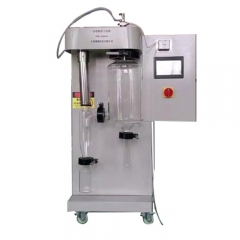
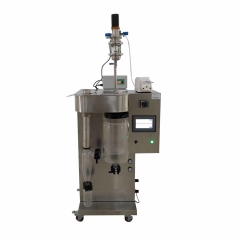
High quality 1.5L scale lab spray dryer equipment
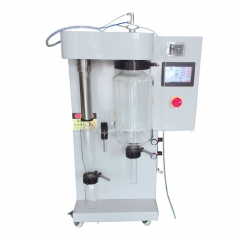
Lab scale spray dryer is suitable for the production of in universities, research institutes and food and pharmaceutical chemical enterprises.
Choosing a laboratory internal mixer involves more than selecting the largest available mixing chamber. The machine must handle the actual batch size, provide suitable mixing action for the compound, and allow researchers to control important process conditions. Chamber volume, batch size, and rotor speed should therefore be considered together rather than as separate specifications.
The mixing chamber is the enclosed space in which the rotors work the material. Its nominal volume helps compare models, but it does not directly indicate the batch weight in kilograms.
Consider the normal sample quantity, the largest planned batch, and how often formulations will change. A chamber that is too small cannot accommodate the required charge; one that is much larger than the usual test scale may make the intended filling and mixing conditions harder to maintain.
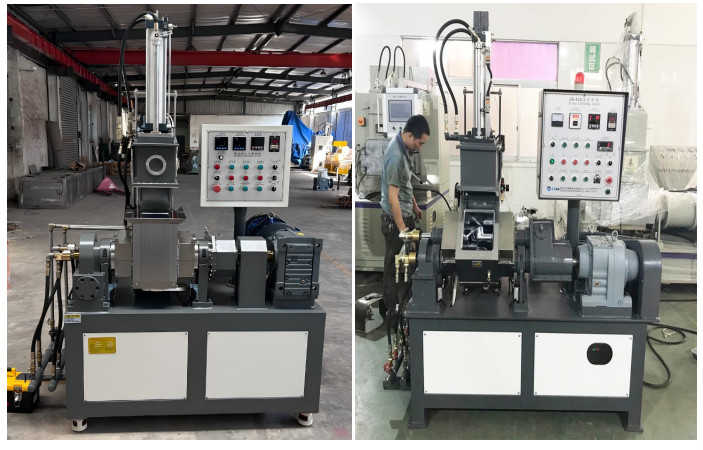
OLLITAL lists the OLT-420 laboratory internal mixer in several chamber-volume configurations, with special models available according to customer requirements. Confirm the stated volume unit, usable working range, and exact model configuration in the quotation before comparing it with another machine.
Chamber volume and batch weight are not interchangeable. Practical batch weight depends on compound density, formulation, material behavior, and the recommended fill level for the selected rotor and machine.
Do not convert chamber volume into kilograms using a general assumption. Provide the material, formulation where available, and normal and maximum batch weights. Ask the supplier to confirm the working batch for that compound and model.
If the laboratory handles several materials, consider both the smallest routine batch and the largest expected batch. The most suitable machine should accommodate the actual research range, not just one occasional maximum batch.
Rotor speed affects material circulation and mixing intensity. The appropriate setting depends on the compound and experiment. Higher speed is not automatically better; temperature rise, material sensitivity, and required dispersion must also be considered.
When comparing machines, check the specified rotor speeds and clarify whether the figures refer to the speeds of the two rotors, whether they are fixed or adjustable, and what units are used. OLLITAL’s OLT-420 product information lists paired rotor-speed values for different models, but the published table does not clearly identify the units. Confirm the exact speed specification and control method for the selected configuration before ordering.
For repeatable trials, record rotor speed, batch weight, mixing time, temperature, and formulation.
Temperature and mixing time also influence compound behavior. OLLITAL describes the OLT-420 series as having automatic temperature and time control, a pressurized sealed chamber, and a chamber designed for easier cleaning between formulations or colors.
Confirm the temperature range, measurement method, and control functions for the selected model; options may differ by configuration.
To help the supplier recommend a suitable laboratory internal mixer, prepare the following information:
Material type and formulation, including fillers or additives where relevant.
Normal and maximum batch weight.
Required chamber-volume range or target research scale.
Mixing objective, such as compounding, blending, or dispersion.
Required rotor-speed range or any speed conditions specified by your test method.
Temperature and mixing-time requirements.
These details help the supplier review chamber size, batch capacity, rotor speed, and temperature control together.
The right laboratory internal mixer should match the scale of the experiment and the behavior of the material. Chamber volume defines the nominal mixing space, batch size determines the practical material charge, and rotor speed influences the mixing action. Reviewing these factors alongside temperature and time control helps laboratories specify a configuration that fits their research requirements.
Explore the OLLITAL laboratory internal mixer for product details. For model recommendations or a customized configuration, contact the OLLITAL team with your material information and target batch size.



 un service en ligne
 +86 15960821529
 kevin@ollital.comkevinollital@gmail.com
 +86 15960821529
 +8615960821529


