
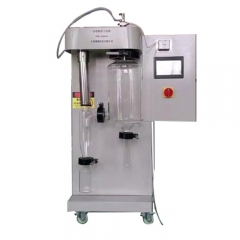
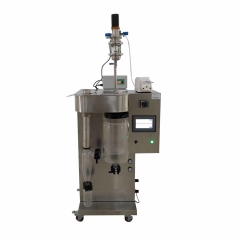
High quality 1.5L scale lab spray dryer equipment
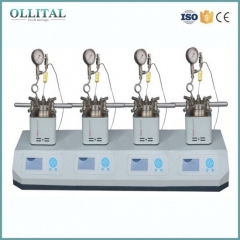
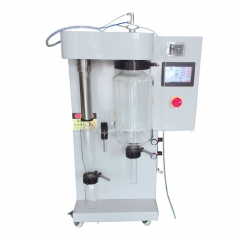
Lab scale spray dryer is suitable for the production of in universities, research institutes and food and pharmaceutical chemical enterprises.
Injection molding machines are a widely used type of industrial equipment in the production of plastic products. They function primarily by heating and plasticizing raw plastic material, then injecting it into a mold cavity. Through subsequent stages—holding pressure, cooling, and demolding—the material is shaped into the final plastic product. Today, injection molding machines are extensively employed across various sectors, including automotive components, electronics, home appliances, medical devices, consumer goods, packaging, and general industrial manufacturing. With advancements in automation, precision manufacturing, and energy-saving technologies, modern injection molding machines have seen significant improvements in production efficiency, control precision, and energy utilization.
A simple summary of the injection molding process: the plastic particles are heated and melted through the barrel, the screw injects the melt into the closed mold cavity at high pressure, the pressure is maintained and cooled to shape, the finished product is ejected after the mold is opened, and the cycle is repeated for mass production. The entire set of equipment is mainly divided into six modules: 1. Injection system: screw, barrel, nozzle, completes raw material plasticization, metering, and injection. 2. Mold clamping system: mold clamping, mold opening, and ejection to ensure that the mold does not expand and flash during high-pressure injection; 3. Drive system: hydraulic/servo/all-electric to provide power for the action. 4. Temperature control system: barrel heating, mold cooling, and melt temperature control. 5. Electrical control system: PLC, sensors, accurately control pressure, speed and time. 6. Safety protection system: safety door and pressure protection to ensure the safety of workshop operations. Complete molding cycle: mold closing → injection → pressure holding → cooling → pre-molding → mold opening → product ejection.
The operation of an injection molding machine primarily consists of several stages: feeding, heating and plasticizing, injection, holding (packing), cooling, mold opening, and ejection. First, plastic pellets enter the barrel via a hopper, where they are gradually melted and thoroughly mixed through the application of heat and the shear force generated by the rotating screw. Next, the screw advances, injecting the molten plastic into the closed mold cavity at a specific pressure and speed. During the holding phase, pressure is maintained to compensate for the shrinkage that occurs as the plastic cools, thereby ensuring the dimensional accuracy and quality of the molded product. Subsequently, the plastic cools and solidifies within the mold, aided by the mold's cooling system. Finally, the mold-clamping system opens the mold, and the ejection system pushes out the finished product, completing one injection molding cycle before the process begins anew for the next production cycle.
When selecting an injection molding machine, one should not focus solely on the price; rather, a comprehensive assessment based on actual production requirements is necessary.
First, determine the weight of the product and calculate the material weight for components such as the runner system.Choosing an appropriate injection capacity based on the total material requirement ensures that the equipment’s capabilities are sufficient.
Generally, a larger projected area of the product requires a higher clamping force.
Therefore, the appropriate clamping force should be determined by considering factors such as the product's projected area, the material used, and the required injection pressure.
Different plastic materials—such as PP, ABS, PC, or PA—possess distinct melting temperatures, flow characteristics, and processing properties.
Because the temperatures and process parameters required for these materials can vary significantly, it is essential to identify the specific plastic material to be used before purchasing an injection molding machine.
For high-volume production, key considerations include the cycle time per molding, injection speed, cooling efficiency, level of automation, energy consumption, and equipment stability. For long-term, continuous production, an injection molding machine that is highly efficient, energy-saving, and stable in operation can effectively reduce overall production costs.
Modern injection molding production lines can be integrated with various types of automation equipment, such as robotic parts-removal arms, automatic material-loading systems, conveyor belts, mold temperature controllers, chillers, dehumidifying dryers, and automated inspection systems.
Integrating such automation helps reduce manual labor while enhancing production efficiency and product consistency.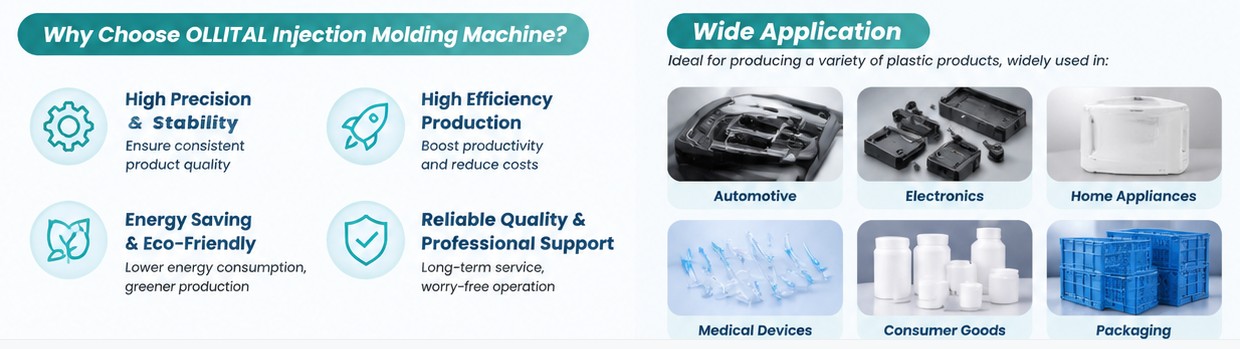
An appropriately specified injection molding machine should offer stable injection performance, sufficient clamping force, precise parameter control, an adequate shot capacity, high energy efficiency, and reliable, consistent operation; it should also be easy to maintain and service. Therefore, when purchasing an injection molding machine, one must take a holistic approach—considering the specific product, materials, molds, production volume, and automation requirements—to ensure the equipment aligns with actual production conditions, rather than making a decision based solely on a single technical parameter or the price of the machine.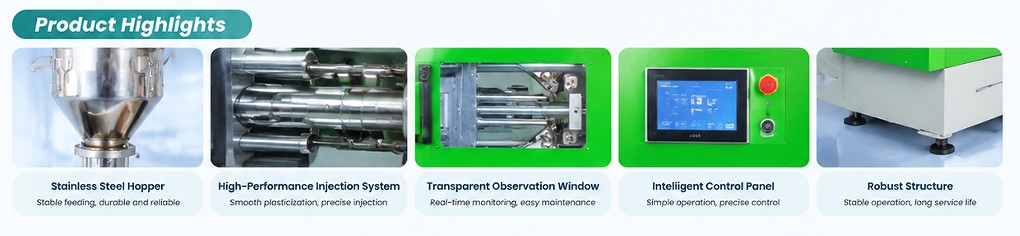
Injection molding machines are essential production equipment in the modern plastics manufacturing industry. Through processes such as plasticization, injection, holding pressure, cooling, and demolding, they enable the efficient production of plastic products in a wide variety of complex shapes and specifications. As the manufacturing sector continues to evolve toward higher precision, greater efficiency, increased automation, and improved energy conservation, injection molding machines are also seeing continuous advancements in control accuracy, production throughput, and intelligence. When purchasing an injection molding machine, enterprises should make a comprehensive selection based on factors such as product weight and dimensions, the type of plastic material used, mold dimensions, production volume, clamping force, shot capacity, and automation requirements. Choosing a machine that aligns with specific production needs is the only way to ensure product quality while simultaneously boosting production efficiency and reducing long-term manufacturing costs.



 un service en ligne
 +86 15960821529
 kevin@ollital.comkevinollital@gmail.com
 +86 15960821529
 +8615960821529


