
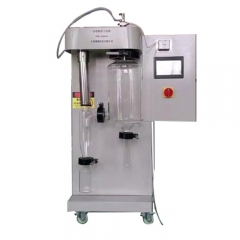
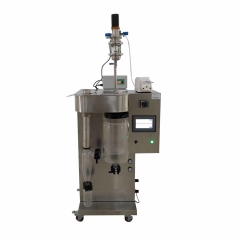
High quality 1.5L scale lab spray dryer equipment
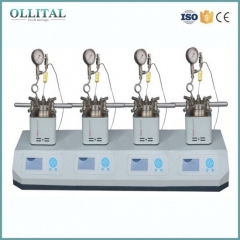
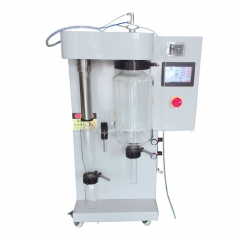
Lab scale spray dryer is suitable for the production of in universities, research institutes and food and pharmaceutical chemical enterprises.
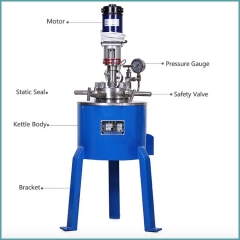
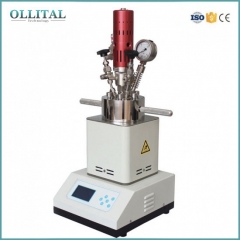
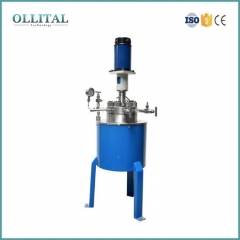
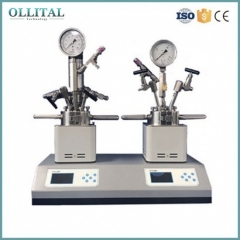
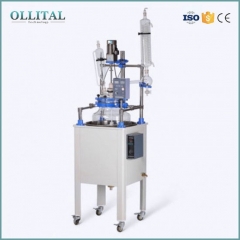
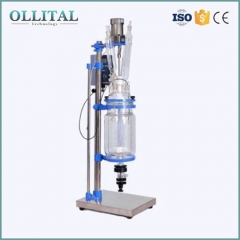
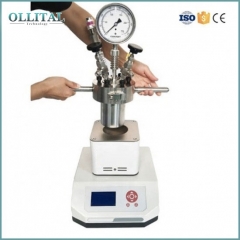
Choosing a high pressure reactor involves more than deciding the required vessel volume, working pressure, and temperature. The material in contact with the reaction medium can affect corrosion resistance, contamination risk, cleaning requirements, service life, and the suitability of the equipment for a particular chemical process.
A reactor that performs well in one experiment may not be appropriate for another, even when both reactions use similar temperatures and pressures. Acidic solutions, alkaline media, organic solvents, hydrogen-containing systems, and hydrothermal reactions can impose very different demands on the vessel and its internal components.
For this reason, high pressure reactor material selection should begin with the actual reaction environment. Stainless steel is a common choice for laboratory reactors, but certain applications may require a more corrosion-resistant alloy or a compatible internal liner.
Understanding the differences between these options helps researchers narrow down suitable configurations and identify the material questions that should be confirmed before purchasing a reactor.
A high pressure reactor contains a reaction medium under defined operating conditions. Its material must withstand the mechanical demands of pressure and temperature while remaining compatible with the chemicals it contacts.
Several factors make this decision important.
The reaction medium may attack a metal surface, degrade a polymer liner, or affect seals and fittings. The extent of corrosion depends not only on the chemical name but also on concentration, temperature, pressure, impurities, and exposure time.
A material that is suitable for a dilute solution at room temperature may behave differently in a concentrated solution at elevated temperature. Likewise, compatibility with one organic solvent does not establish compatibility with every solvent or mixed chemical system.
Corrosion can also affect the quality of experimental results. Metal ions or corrosion products may enter the reaction mixture and interfere with catalytic activity, material characterization, or product purity.
The reactor body and cover must withstand the intended pressure and temperature. Material strength, component geometry, connection design, and manufacturing quality all contribute to the overall pressure capability.
Selecting a corrosion-resistant alloy does not automatically mean that a reactor made from it can operate at any pressure or temperature. The complete vessel must be designed and rated for the intended conditions.
In some experiments, even small amounts of material released from the vessel or internal components can affect the result. This may matter in catalyst evaluation, pharmaceutical research, high-purity synthesis, or studies where trace elements influence the properties of the final product.
The required level of cleanliness and contamination control should therefore be considered alongside corrosion resistance.
A suitable material should also fit the laboratory's cleaning procedures and experimental workflow. Residues may adhere differently to different surfaces, while some liners can be removed for cleaning or replacement.
However, easy cleaning does not guarantee compatibility with every cleaning solvent or procedure. Both the reactor material and the cleaning method need to be evaluated together.
A stainless steel high pressure reactor is a common choice for laboratory research because stainless steel offers a practical balance of mechanical strength, corrosion resistance, and ease of maintenance. However, the appropriate grade depends on the chemicals, concentrations, and operating temperatures involved in the experiment.
Ollital's high pressure reactor product range includes stainless steel constructions such as 304/304L and 316/316L, alongside alternative alloys and optional liners for selected configurations. The appropriate grade depends on the intended process rather than a universal ranking of materials.
304 stainless steel is used in many general-purpose equipment applications. Its suitability for a particular reactor depends on the chemicals involved, operating temperature, and other process conditions.
The low-carbon variant, 304L, is often considered where welding-related corrosion concerns are relevant. However, the designation alone does not establish whether a finished reactor is suitable for a particular corrosive medium.
For laboratory reactor selection, 304/304L may be a candidate when the chemical environment is compatible and the required mechanical operating limits are met.
316 stainless steel contains molybdenum, which can improve resistance to certain forms of corrosion compared with 304 in some environments. This makes 316/316L a common material to consider for laboratory equipment exposed to a broader range of chemical media.
It is not corrosion-proof. Chloride-containing solutions, certain acids, elevated temperatures, and other aggressive conditions can still create corrosion risks. The actual compatibility must be evaluated for the specific chemical composition and operating conditions.
For researchers comparing stainless steel options, the key question is not simply whether 316L is “better” than 304L. It is whether the selected grade provides adequate corrosion resistance and mechanical performance for the intended experiment.
When is stainless steel a reasonable choice?
Stainless steel can be a practical starting point when:
·The required operating temperature and pressure are within the reactor's rated limits.
·The risk of metal contamination is acceptable for the experiment.
·The cleaning procedure is compatible with the material and internal components.
If the reaction involves aggressive acids, halide-containing media, unusual solvents, or strict trace-metal requirements, do not assume that standard stainless steel is sufficient without a compatibility assessment.
When stainless steel does not provide the required resistance to the reaction medium, a more specialized alloy may be worth evaluating.
Alloy selection is not simply a choice between “standard” and “premium” materials. Different alloys have different strengths and limitations, and the appropriate option depends on the specific corrosive environment.
Hastelloy is a family of nickel-based corrosion-resistant alloys. Different grades are designed for different chemical environments, so the specific grade matters.
For certain aggressive chemical systems, a suitable Hastelloy alloy may provide better resistance than conventional stainless steel. However, the family name alone is not enough to establish compatibility. The exact composition, concentration, temperature, and other operating conditions must be considered.
For example, Hastelloy C-type alloys and B-type alloys are not interchangeable simply because both belong to the same broad alloy family. Material selection should be based on the actual chemical environment and the manufacturer's compatibility guidance.
Monel alloys are nickel-copper materials used in selected corrosive environments. Their suitability depends on the alloy grade and the chemicals involved.
They may be considered when the reaction medium presents compatibility challenges for conventional stainless steel, but they are not a universal upgrade for every acid, alkali, or solvent system.
Inconel is a family of nickel-based alloys known for properties that can be useful in demanding thermal and mechanical environments. Specific grades may be considered where high-temperature strength or resistance to particular forms of degradation is important.
However, temperature resistance and corrosion resistance are separate considerations. A grade that performs well at elevated temperature may not be the best choice for every corrosive chemical.
Titanium and zirconium are also used in specialized chemical-processing applications. Their suitability depends on the chemical environment, operating conditions, fabrication requirements, and the design of the complete reactor.
They should not be selected solely because a reaction is described as “corrosive.” Compatibility must be assessed against the actual process medium.
Ollital lists several alternative metal materials, including Hastelloy, Monel, Inconel, nickel, titanium, and zirconium, for selected high pressure reactor configurations. Availability and suitability should be confirmed for the required model and operating conditions.
Instead of asking which alloy is universally best, start with these questions:
What chemicals will contact the vessel, including solvents, catalysts, and possible reaction by-products?
What are their concentrations and operating temperatures?
Are there known corrosion concerns involving pitting, crevice corrosion, or other localized attack?
Is trace-metal contamination a concern for the experiment?
Can the proposed alloy be supplied in a reactor configuration rated for the required pressure and temperature?
When the chemistry is uncertain, obtain a material compatibility assessment from the equipment supplier or a qualified materials specialist before finalizing the specification.
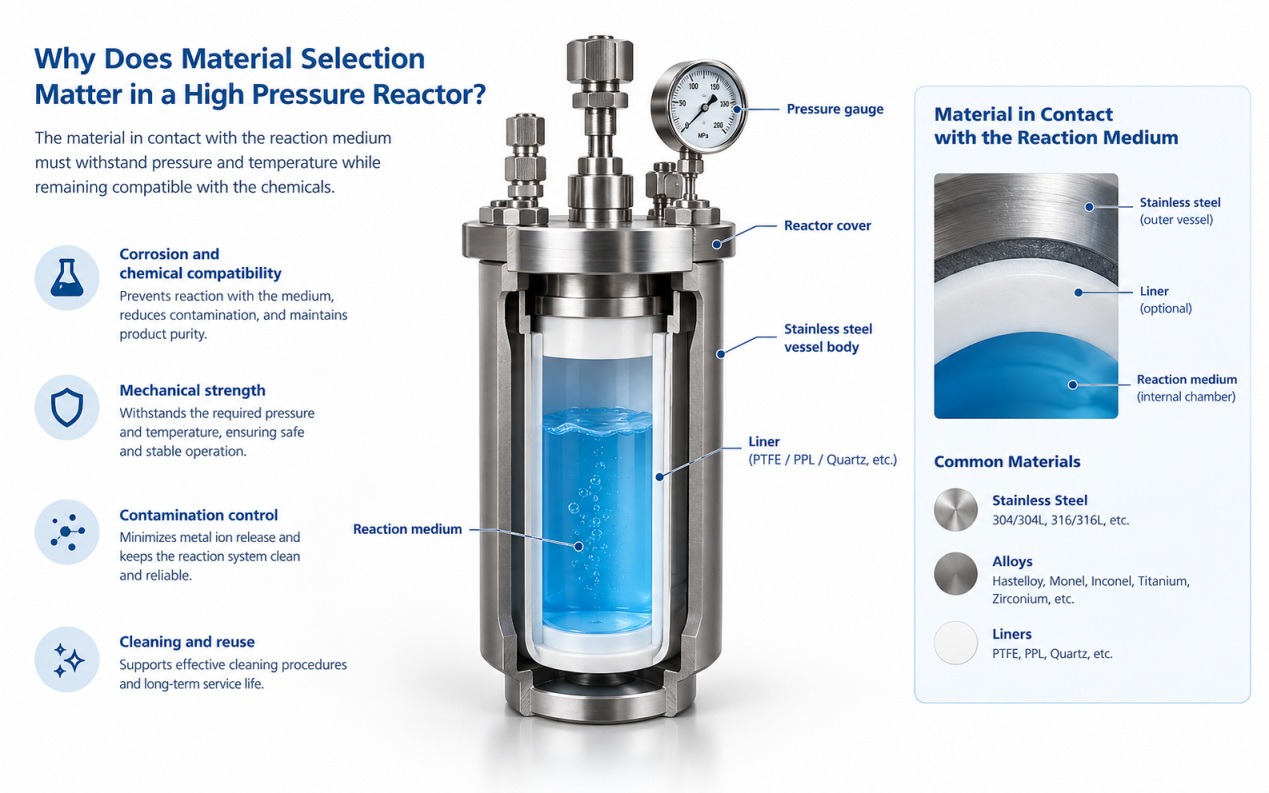
A reactor liner is an internal component that separates the reaction medium from at least part of the metal vessel. Depending on the reactor design, it may provide chemical compatibility, reduce direct contact between the reaction medium and the outer vessel, or make the internal chamber easier to remove and clean.
A liner does not replace the pressure-containing vessel. The outer body and the complete assembly must still be suitable for the intended operating conditions.
Several liner materials are used in laboratory reactor configurations, but they differ in temperature capability, mechanical behavior, optical properties, and chemical compatibility.
PTFE, commonly known as Teflon, is used in many laboratory vessels because of its broad chemical resistance. It can be useful for selected acid digestion, hydrothermal synthesis, and materials research applications.
Its suitability depends on the chemical system and the operating temperature. PTFE has temperature limitations and can exhibit changes in mechanical properties under heat and load. The permitted temperature and pressure conditions must therefore follow the specifications of the particular liner and reactor assembly.
Ollital's hydrothermal reactor content describes PTFE liners as an option for conventional hydrothermal synthesis and acid digestion, with application-specific temperature limits. These limits should be confirmed against the selected product and its operating instructions.
PPL is another liner material used in certain hydrothermal and high-temperature applications. It may be considered when the required operating temperature is beyond the suitable range of a particular PTFE liner.
That does not mean PPL is appropriate for every high-temperature chemical system. Chemical compatibility, mechanical condition, operating limits, and the manufacturer's guidance still need to be checked.
The choice between PTFE and PPL should be made using the specifications of the complete reactor configuration, rather than a general assumption that one material is always superior.
Quartz glass may be available for selected laboratory reactor designs, particularly when optical access or specific chemical compatibility requirements are important.
Its suitability depends on the design of the pressure-containing assembly, the chemical medium, and the temperature and pressure conditions. Quartz should not be assumed suitable for every reaction simply because it is chemically resistant to certain media.
If visual observation is required, confirm whether the proposed system uses a quartz liner, a pressure-rated optical window, or another configuration. These are different design approaches and should not be treated as interchangeable.
A liner may be worth considering when:
·The reaction medium is incompatible with the exposed metal surface.
·Reducing direct contact between the reaction mixture and the metal is important.
·The selected liner meets the required temperature and chemical compatibility conditions.
A liner is not automatically necessary for every reaction, and it does not make an otherwise unsuitable reactor safe for an aggressive chemical system. The entire assembly—including the vessel, liner, seal, fittings, and operating limits—must be considered.
Stainless steel, corrosion-resistant alloys, and reactor liners serve different purposes in high pressure reactor design. The right choice depends on the chemical environment, operating conditions, and the requirements of the experiment.
Stainless steel is a practical starting point for many laboratory applications. Grades such as 304/304L and 316/316L offer a combination of mechanical strength and corrosion resistance. However, their suitability depends on the specific chemicals, concentrations, and temperatures involved. Stainless steel should not be assumed compatible with every acid, solvent, or corrosive reaction medium.
Specialized alloys are worth considering when conventional stainless steel may not provide sufficient corrosion resistance or other required properties. Materials such as Hastelloy, Monel, and selected nickel-based alloys can be suitable for particular chemical environments. Their performance varies by grade, so the exact alloy must be evaluated against the reaction conditions rather than selected by its name alone.
A reactor liner provides a different approach to chemical compatibility. Instead of changing the metal construction of the vessel, a compatible liner separates the reaction medium from the inner surface of the outer vessel. PTFE and PPL are used in selected reactor configurations, depending on the required temperature range and chemical compatibility. A liner may be useful for hydrothermal synthesis or other applications where direct contact between the reaction medium and the metal vessel should be limited.
It is important to distinguish a liner from the pressure-containing vessel itself. A liner does not automatically increase the reactor's allowable pressure or make an otherwise incompatible configuration suitable for a particular reaction. The complete assembly—including the vessel, liner, seals, and fittings—must meet the intended operating requirements.
When comparing these options, start with the chemicals and solvents that will contact the equipment, then consider their concentrations, operating temperature, required pressure, and potential contamination concerns. Cleaning procedures, maintenance requirements, and the expected frequency of use may also influence the decision.
Ultimately, the best material is not necessarily the most expensive alloy or the most chemically resistant liner. It is the option that provides suitable chemical compatibility and mechanical performance for the intended experiment.
Material selection becomes easier when the intended application is considered alongside the chemical environment.
Hydrothermal research commonly involves a liquid medium heated inside a sealed vessel. The vessel and liner must be compatible with the solution and suitable for the pressure and temperature that may develop.
A PTFE or PPL liner may be appropriate for some configurations, but the decision depends on the operating temperature, chemical composition, and the manufacturer's specifications. Low-boiling solvents and reactions that generate substantial quantities of gas require particular attention to whether the selected vessel design is suitable for the process.
When selecting a lab high pressure reactor for hydrothermal synthesis, researchers should consider not only the reaction temperature and pressure but also the compatibility of the vessel material or liner with the reaction solution.
Hydrogenation research requires attention to the compatibility of the reactor body, seals, valves, and gas-handling components with the reaction medium and operating conditions.
The presence of hydrogen does not by itself determine the correct metal grade. The solvent, catalyst, reactants, impurities, temperature, and pressure also matter. If corrosion or contamination is a concern, the complete wetted-material list should be reviewed.
For acid digestion, the reaction medium may be aggressive toward the outer metal vessel. A compatible liner can help isolate the sample from the metal body, depending on the vessel design.
However, acid concentration, temperature, and exposure time affect compatibility. Do not assume that a liner's general resistance to acids means it is suitable for every acid mixture or operating condition.
Polymerization and materials synthesis may involve solvents, monomers, catalysts, suspensions, or mixtures that change during the reaction. In such cases, both chemical compatibility and the physical properties of the reaction mixture should be considered.
Viscosity, suspended solids, cleaning requirements, and possible deposits can affect which internal components are practical. Where the product is sensitive to trace contamination, the wetted materials deserve particular attention.
Before requesting a quotation for a stainless steel high pressure reactor or a customized alloy or liner configuration, prepare the information below.
·List the reactants, solvents, catalysts, and any cleaning chemicals that may contact the equipment.
·Explain whether pressure comes from introduced gas, heating, or reaction-generated gas.
·Confirm the intended working volume and any special process requirements.
·Ask which materials are available for the vessel body, cover, valves, fittings, and other wetted components.
·Confirm whether a liner is available and whether it is removable.
·Check the rated limits for the complete configuration, including the liner and seals.
·Establish how signs of corrosion, deformation, cracking, or liner damage should be handled.
This information helps suppliers evaluate the actual requirements instead of recommending a material based on the reactor's volume or maximum pressure alone.
Stainless steel, specialized alloys, and internal liners serve different roles in high pressure reactor design. Stainless steel may be suitable for many general laboratory applications, while certain chemical environments may call for a more corrosion-resistant alloy or a compatible liner.
There is no universally best material. A reliable selection depends on the chemicals involved, their concentrations, operating temperature and pressure, contamination requirements, and the construction of the complete reactor assembly.
Before choosing a high pressure reactor material, define the reaction environment and verify compatibility for every component that contacts the process medium. This approach provides a stronger basis for selecting equipment that meets both experimental and operating requirements.
There is no single best material for every application. Stainless steel may be suitable for many laboratory reactions, while specialized alloys or compatible liners may be needed for more demanding chemical environments. The choice depends on the reaction medium, temperature, pressure, and contamination requirements.
Both are used in equipment construction, but their corrosion resistance differs. 316 stainless steel contains molybdenum, which improves resistance to certain forms of corrosion in some environments. Neither grade is suitable for every chemical, so compatibility should be verified for the actual reaction conditions.
A suitable Hastelloy grade may be worth considering when the reaction medium presents corrosion challenges for conventional stainless steel. The exact alloy grade, chemical composition, temperature, and exposure conditions must be evaluated before making the selection.
Both are used in selected laboratory reactor configurations, but their temperature capabilities, mechanical behavior, and chemical compatibility differ. PTFE is commonly considered for many conventional hydrothermal and acid-digestion applications, while PPL may be considered for certain higher-temperature applications. Always verify the limits of the complete reactor assembly.
Not necessarily. A liner is primarily an internal component that provides a compatible contact surface for the reaction medium. The allowable pressure depends on the design and rating of the complete assembly, including the vessel, cover, seals, liner, and other components.



 un service en ligne
 +86 15960821529
 kevin@ollital.comkevinollital@gmail.com
 +86 15960821529
 +8615960821529


